<script async src="https://pagead2.googlesyndication.com/pagead/js/adsbygoogle.js?client=ca-pub-7001450216977829"
crossorigin="anonymous"></script>
Shatter Career Obsolescence: The Ruthless AI Catalyst & Your Blueprint for Custom n8n Automation Services
The traditional 9-to-5 is dying. Discover how the AI revolution is fracturing global employment and why launching custom n8n automation services guarantees your financial freedom.
CUSTOM N8N AUTOMATION SERVICES,GLOBAL EMPLOYMENT TRENDS 2026, AI JOB IMPACT, TECH LAYOFFS 2026, FUTURE OF WORK, JOB MARKET TRENDS WORLDWIDE, AI REPLACING JOBS, HIRING SLOWDOWN 2026, EMPLOYMENT CRISIS GLOBAL, WORKFORCE TRANSFORMATION, JOBS AND AI
7/8/202613 min read
The Illusion of Stability: Why the Global Job Market is Forcing You to Choose Between AI Mastery and Obsolescence
Did you know that within the next two to three years, 50% to 55% of all jobs in the United States will be fundamentally reshaped by Artificial Intelligence? Or that the top 20% of companies fully embracing AI have seen a staggering 163% boost in labor productivity, completely outpacing their competitors? Welcome to the new economic reality. If you think your traditional 9-to-5 job is safe, you need to look closer at the data. I am Buzz Leaps, author and publisher of motivational books, and my mission is to encourage you to learn new skills so you can become independent and stop relying on fragile corporate jobs. My recent book, WHEN THE MONEY RUNS OUT, is already a bestseller on Amazon Kindle because people are waking up to this truth: the traditional job market is fundamentally breaking.
The global economy is currently undergoing a massive, structural transformation. Across the United States, Canada, Europe, Australia, China, and India, headline unemployment figures are masking a deep, underlying friction. We are moving away from an era of labor stability into an era where artificial intelligence dictates the winners and losers.
Here is a deep dive into the breaking news on global employment, how AI is splitting the workforce in two, and how you can take control of your financial destiny.
The Global Employment Breakdown: A Region-by-Region Analysis
To understand why you need to break free from traditional employment, we must first look at the latest macroeconomic data from mid-2026. While some politicians boast about low unemployment rates, the underlying metrics reveal a chilling reality of shrinking workforces and structural weaknesses.
The United States: A Shrinking Labor Force
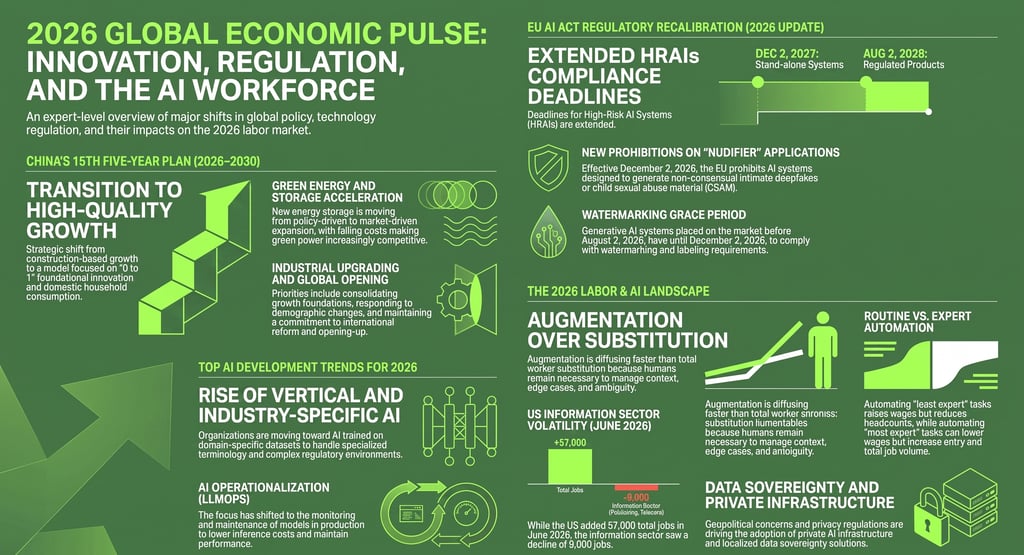
On the surface, the U.S. unemployment rate sits at a relatively low 4.2% as of June 2026. However, this number is a mirage. The U.S. economy added only 57,000 nonfarm payroll jobs in June, drastically falling short of the forecasted 115,000. So why did unemployment drop? Because the labor force actively contracted. A staggering 720,000 people left the workforce altogether, driving the labor force participation rate down to 61.5%—its lowest point since March 2021.
Furthermore, major sectors are bleeding jobs. The leisure and hospitality industry lost 61,000 positions, while retail trade shed 7,500 jobs and the information sector lost 9,000. The job growth we did see was heavily concentrated in professional and business services and healthcare. The traditional American job engine is stalling, and relying on it is becoming increasingly precarious.
Canada: A Rebound Built on Shaky Ground
Canada experienced a surge in May 2026, adding 88,000 jobs—its biggest gain in six months—which dropped the national unemployment rate to 6.6%. This gain was driven entirely by an increase of 154,000 full-time positions, which offset part-time job losses.
However, beneath this positive headline, the Bank of Canada and regional experts have noted severe structural weaknesses in the Canadian labor market. The national employment rate sits at just 60.7%. Canada is heavily investing in a $2.4 billion "AI for All" strategy to build a future-ready workforce and create 250,000 AI-related jobs by 2031, acknowledging that traditional industries will soon face massive disruptions.
Europe: Record Lows, But No Wage Boom
In the Euro area, the unemployment rate remained at a historic low of 6.2% in May 2026, with the broader EU unemployment rate sitting at 5.9%. Germany boasts an incredibly low rate of 3.8%, and Czechia sits at just 2.8%. Yet, countries like Spain and Greece are still battling severe unemployment crises at 23.7% and 16.8%, respectively.
Despite the historically tight labor market in much of Europe, the anticipated wage boom has completely failed to materialize. Employers are finding ways to navigate around raising salaries, and the European Union has recently agreed to delay the enforcement of strict regulations regarding "high-risk" AI systems in employment decisions until December 2027. This delay, part of the EU AI Act 'omnibus' deal, gives corporations more time to integrate AI into their hiring and management processes without heavy regulatory oversight.
Australia: Resilient but Shifting
Australia's labor market remains a global outlier in terms of resilience. In May 2026, the unemployment rate fell to 4.4%, and the economy added a stronger-than-expected 40,300 jobs. The country also boasts a near-record high workforce participation rate of 66.7%. However, even in Australia, the government has recognized that artificial intelligence is becoming a transformative force, though current reports suggest it is not yet causing broad, immediate disruption.
China: The Youth Unemployment Crisis
China is facing a massive structural mismatch. With a record 12.7 million college graduates entering the workforce in 2026, the country has struggled to absorb young talent. In May 2026, China's urban youth unemployment rate (for ages 16–24, excluding students) dropped to 15.6%. While this is an 11-month low, it remains a severe crisis. To combat this, China’s State Council released the "15th Five-Year Plan for Implementing the Employment-First Strategy" (2026-2030), shifting focus toward high-quality growth, domestic consumption, and expanding vocational AI skills training to align graduates with the new tech-driven economy.
India: The Tech Boom and the Talent Deficit
India presents a fascinating divergence. The overall unemployment rate remained steady at 5.5% in May 2026, but the urban unemployment rate dropped to a one-year low of 6.4% while rural unemployment slightly ticked up to 5.1% due to seasonal agricultural shifts.
However, India is rapidly transforming into a global AI hub. AI-related job postings in the region have doubled since 2023. Yet, the country is facing a massive business crisis: a severe AI talent gap. In 2024, India had a talent shortfall of close to 50%, and by 2026, this gap is projected to exceed 1.4 million AI professionals. In response, the Indian government has launched massive skilling initiatives, such as the IndiaAI Mission and the 'YUVA AI for ALL' program, to upskill its massive youth demographic—where 65% of the population is under 35.
How Artificial Intelligence is Fundamentally Changing the World
The statistics above prove one thing: traditional employment is stagnating. But why? The answer is Artificial Intelligence. We have officially moved past the phase where AI was just an experimental chatbot; it is now the core driver of global economic restructuring.
Reshaping vs. Replacement
A common myth is that AI will cause a sudden "job apocalypse." According to a microeconomic model by BCG, AI will not immediately eliminate all jobs. Instead, 50% to 55% of all U.S. jobs will be fundamentally reshaped over the next two to three years, while only 10% to 15% of jobs are at high risk of total elimination over the next five years.
Currently, global enterprise AI adoption focuses on process efficiency (64%) and employee productivity (59%), rather than explicit headcount reduction (24%). AI use cases like summarization (71%), translation (62%), and data management (61%) are becoming standard. However, this means that if you do not adapt to use these tools, your specific role will be given to someone who does.
The "Two-Track" Labor Market
According to PwC’s 2026 Global AI Jobs Barometer, AI is actively creating a polarized, "two-track" labor market.
Professionalised Roles: These are jobs where AI acts as a force multiplier for human experts (e.g., medical diagnostics, complex legal consulting, advanced coding). These roles require deep human skills like judgment, empathy, and leadership. Professionalised roles are growing twice as fast as other jobs and feature a massive 42% faster wage growth.
Democratised Roles: These are jobs where AI makes the tasks so simple that non-experts can perform them. Because the barrier to entry is lowered, these jobs see wage stagnation and increased competition.
The 62% AI Wage Premium
Because AI drastically amplifies human performance, companies successfully integrating it are pulling far ahead of their competitors. The top 20% of AI-exposed "super-star" companies have seen a 163% boost in labor productivity. As a result, these companies are growing their headcounts faster than non-AI companies (52% vs. 36%) and raising wages faster (24% vs. 17%).
For individuals, the financial reward for mastering AI is astronomical. The average global wage premium for workers with specialized AI skills has surged to 62%. In some sectors, like consumer markets, this premium reaches an astonishing 118%. If you are not learning AI, you are leaving massive amounts of money on the table.
The "Seniorisation" of Entry-Level Work
This is perhaps the most critical warning for young people entering the workforce. Historically, entry-level jobs consisted of routine, repetitive tasks (basic coding, data entry, simple copywriting) that served as an apprenticeship. AI is now automating these tasks completely.
Because the basic work is handled by machines, human entry-level roles are now seven times more likely to demand traditionally senior-level skills, such as strategic thinking, leadership, creativity, and complex judgment. This is creating structural barriers for young graduates globally and compressing traditional career ladders. You can no longer rely on a company to slowly train you; you must bring high-level cognitive value on day one.
Sovereign AI and Government Panic
Recognizing that AI talent is the new global currency, governments are panicking and pouring billions into "Sovereign AI" initiatives.
Canada: Launched a $2.4 billion strategy targeting 250,000 AI jobs by 2031.
India: Rolled out a massive IndiaAI Mission to upskill its youth and fill a projected 1.4 million professional talent gap.
USA: The Department of Labor launched a 'Make America AI-Ready' initiative, offering text-message-based AI literacy courses to the public.
When governments start desperately trying to train their citizens, it is a glaring signal that the old economic model is dead.
Taking Control: How to Thrive When The Money Runs Out
In my book, WHEN THE MONEY RUNS OUT, I discuss the dangerous illusion of the steady paycheck. The data above proves my point. The global labor force is contracting, inflation and high interest rates are squeezing businesses, and AI is automating the bottom rungs of the corporate ladder. If you are relying on a single employer to take care of you, you are standing on a trapdoor.
To survive and thrive in this new economy, you must become independent. You must transition from being an employee waiting for tasks, to an entrepreneur and problem-solver utilizing technology to create immense value.
1. Stop Competing; Start Automating
The data shows that routine tasks are being democratized and devalued. You cannot compete against a machine on speed or cost. Instead, you must become the master of the machine. Businesses across the globe are desperate to integrate AI to achieve that 163% productivity boost, but they lack the internal talent to do it.
This is your golden opportunity. By learning how to connect different software platforms, utilize APIs, and deploy AI agents, you can build systems that save companies hundreds of thousands of dollars. For example, by learning how to provide custom n8n automation services, you can walk into a small or medium-sized business and completely revolutionize their workflow. You can automate their lead generation, their customer service follow-ups, and their internal data management. By offering custom n8n automation services, you transition from being an hourly employee to an invaluable technology partner. You dictate your own fees, you set your own hours, and you build a business that scales infinitely.
2. Cultivate 'Professionalised' Skills
AI cannot replace empathy, complex negotiation, creative strategy, or leadership. As the PwC report highlighted, jobs requiring these skills are seeing a 42% faster wage growth. You must aggressively develop your emotional intelligence and strategic thinking. Learn how to diagnose a business's underlying problems. An AI can write code, but it takes a human to understand why the code needs to be written to solve a specific human frustration in the market.
3. Embrace Continuous, Self-Directed Learning
The skills gap is widening because the traditional university system cannot keep pace with AI development. You must take responsibility for your own education. Utilize free resources, take online courses, and experiment with Large Language Models (LLMs) daily. Understand how to prompt AI effectively, how to evaluate its outputs for accuracy, and how to use it responsibly. The government's 'Make America AI-Ready' initiative is a start, but true independence requires you to go much deeper.
4. Diversify Your Income Streams
Never let one entity control 100% of your income. Use AI to multiply your output. If you are a writer, use AI to help you outline, research, and format, allowing you to self-publish books, launch newsletters, and write copy for multiple clients simultaneously. If you are an analyst, use AI to process massive datasets in seconds, allowing you to consult for five companies instead of working full-time for one.
Conclusion: The Future Belongs to the Independent
We are living through one of the most profound economic shifts in human history. The traditional job market—with its promises of stability, pensions, and linear career ladders—is evaporating. The global data from the US, Canada, Europe, and Asia all point to the same conclusion: structural friction is here, and AI is the catalyst.
But this is not a reason to despair; it is a reason to mobilize. As I write in WHEN THE MONEY RUNS OUT, times of immense disruption are also times of unprecedented opportunity for those willing to adapt. The 62% wage premium for AI skills isn't just a number; it's a neon sign pointing toward your future.
Stop relying on jobs. Start acquiring skills. Learn how to harness AI, offer high-value solutions like custom n8n automation services, and build an independent life that is completely immune to the next corporate layoff. The tools to build your empire have never been cheaper or more accessible. The only thing standing in your way is your willingness to learn them.
— Buzz Leaps Author & Publisher, 'WHEN THE MONEY RUNS OUT' (Available now on Amazon Kindle)
Context & Authenticity Reference
The insights and analysis provided in this article are synthesized from global labor market reports and macroeconomic data from mid-2026, including publications from the U.S. Bureau of Labor Statistics, Statistics Canada, Eurostat, the Australian Bureau of Statistics, China's National Bureau of Statistics, and India's Periodic Labour Force Survey. Furthermore, the analysis on Artificial Intelligence draws heavily from strategic research by the Boston Consulting Group (BCG) and PwC's 2026 Global AI Jobs Barometer.
Authenticity Reference Links:
World Economic Forum: 15th Five-Year Plan: What China's Development Means to the World: https://www.weforum.org/press/2026/06/15th-five-year-plan-what-china-s-development-means-to-the-world/
Research.com: 2026 AI Careers With the Best Long-Term Growth Potential: https://research.com/online-degrees/artificial-intelligence/ai-careers-with-the-best-long-term-growth-potential
Latham & Watkins: AI Act Update: EU Resolves to Change Rules and Extend Deadlines: https://www.lw.com/en/insights/ai-act-update-eu-resolves-to-change-rules-and-extend-deadlines
Capital Hill Group: AI For All: Building Canada's AI Ready Workforce: https://capitalhillgroup.ca/ai-for-all-building-canadas-ai-ready-workforce/
PwC AI Jobs Barometer: https://www.pwc.com/gx/en/services/ai/ai-jobs-barometer.html
PwC Press Release: AI reshapes global labour market: https://www.pwc.com/gx/en/news-room/press-releases/2026/pwc-2026-ai-jobs-barometer.html
Digital Transformation Agency: AI Policy Update: https://www.dta.gov.au/articles/ai-policy-update-strengthening-responsible-use-across-government
BCG: AI Will Reshape More Jobs Than It Replaces: https://www.bcg.com/publications/2026/ai-will-reshape-more-jobs-than-it-replaces
PIB: AI@Work: Driving Productivity, Jobs, and Innovation: https://www.pib.gov.in/PressReleasePage.aspx?PRID=2226912®=3&lang=1
PIB: India's Youth Dividend in the AI Era: https://www.pib.gov.in/PressReleasePage.aspx?PRID=2230044
EveryCRSReport: Artificial Intelligence (AI) Skills Training in EDA Programs: https://www.everycrsreport.com/reports/IN12699.html
Trading Economics: Australia Unemployment Rate: https://tradingeconomics.com/australia/unemployment-rate
Trading Economics: Canada Unemployment Rate: https://tradingeconomics.com/canada/unemployment-rate
Trading Economics: China Youth Unemployment Rate: https://tradingeconomics.com/china/youth-unemployment-rate
Trading Economics: China Youth Jobless Rate Falls to 11-Month Low: https://tradingeconomics.com/china/youth-unemployment-rate/news/560660
Trading Economics: Euro Area Unemployment Rate: https://tradingeconomics.com/euro-area/unemployment-rate
Trading Economics: United States Unemployment Rate: https://tradingeconomics.com/united-states/unemployment-rate
PM-Partners: Australia's AI Transformation in 2026: https://www.pm-partners.com.au/insights/australias-ai-transformation-in-2026/
Ministers' Media Centre: Australia's labour market remains resilient amid the rise of AI: https://ministers.dewr.gov.au/rishworth/australias-labour-market-remains-resilient-amid-rise-ai
SHRM: Automation, AI, and Job Displacement Risk in U.S. Employment: https://www.shrm.org/in/topics-tools/research/automation-generative-ai-and-job-displacement-risk-in-u-s--employment/2026-full-report
Roth Staffing Companies: BLS: U.S. Economy Adds 57,000 Jobs in June 2026: https://www.rothstaffing.com/bls-u-s-economy-adds-57000-jobs-in-june-2026/
Kingston Reid: Beyond the Headcount: Why AI Redundancies Demand a Different Approach: https://kingstonreid.com/resource-hub/news-and-thought-leadership/beyond-the-headcount-why-ai-redundancies-demand-a-different-approach
Atlantic Council: Building talent and institutional readiness: https://www.atlanticcouncil.org/in-depth-research-reports/issue-brief/building-talent-and-institutional-readiness/
Bank of Canada: Business Outlook Survey—Second Quarter of 2026: https://www.bankofcanada.ca/2026/07/business-outlook-survey-second-quarter-of-2026/
Bank of Canada: Canada's labour market: between cycles and structural change: https://www.bankofcanada.ca/2026/05/canadas-labour-market-between-cycles-structural-change/
Human Resources Director: Canada adds 88,000 jobs in biggest gain in six months: https://www.hcamag.com/ca/news/general/canada-adds-88000-jobs-in-biggest-gain-in-six-months/577941
DLA Piper: Canada unveils national AI strategy: https://www.dlapiper.com/insights/publications/2026/06/canada-unveils-national-ai-strategy
The Varsity: Canada's national AI strategy explained: https://thevarsity.ca/2026/07/07/canadas-national-ai-strategy-explained/
Dentons: Canada's new federal AI strategy: https://www.dentons.com/en/insights/articles/2026/june/16/canadas-new-federal-ai-strategy
Baker McKenzie: Canada: Federal Government Releases Refreshed National AI Strategy: https://www.bakermckenzie.com/en/insight/publications/2026/06/canada-federal-government-releases-refreshed-national-ai-strategy
Stratfor: China Plans To Stabilize Employment in an Age of Change: https://worldview.stratfor.com/article/china-plans-stabilize-employment-age-change
Gov.cn: China to further implement employment-first strategy in 2026-2030: https://english.www.gov.cn/policies/latestreleases/202606/17/content_WS6a32a37fc6d00ca5f9a0bac3.html
China Daily HK: China to streamline its employment structure: https://www.chinadailyhk.com/hk/article/635163
Gibson Dunn: EU AI Act Omnibus Agreement — Postponed High-Risk Deadlines: https://www.gibsondunn.com/eu-ai-act-omnibus-agreement-postponed-high-risk-deadlines-and-other-key-changes/
Morgan Lewis: EU Approves Delays and Other Amendments to Certain EU AI Act Obligations: https://www.morganlewis.com/pubs/2026/06/eu-approves-delays-and-other-amendments-to-certain-eu-ai-act-obligations-what-businesses-should-know
Ogletree Deakins: EU Nears Approval of Agreement to Delay Rules for AI Use in Employment Decisions: https://ogletree.com/insights-resources/blog-posts/eu-nears-approval-of-agreement-to-delay-rules-for-ai-use-in-employment-decisions/
Statistisches Bundesamt: EU unemployment rate 2026: https://www.destatis.de/Europa/EN/Topic/Population-Labour-Social-Issues/Labour-market/EULabourMarketCrisis.html
EU Perspectives: EU unemployment remains near historic lows. But don't expect a wage boom just yet: https://euperspectives.eu/2026/06/eu-unemployment-2025-eurostat-historic-lows-wage-growth/
Maples Group: Employer Update: AI in Workforce Practices – Navigating the EU AI Act: https://maples.com/knowledge/employer-update-ai-in-workforce-practices-navigating-the-eu-ai-act
Bureau of Labor Statistics: Employment Situation News Release & Summary - 2026 M06 Results: https://www.bls.gov/news.release/empsit.htm / https://www.bls.gov/news.release/empsit.nr0.htm / https://www.bls.gov/news.release/pdf/empsit.pdf
Australian Bureau of Statistics: Employment and unemployment: https://www.abs.gov.au/statistics/labour/employment-and-unemployment
Australian Bureau of Statistics: Labour Force, Australia, May 2026: https://www.abs.gov.au/statistics/labour/employment-and-unemployment/labour-force-australia/latest-release
Goldman Sachs: How Will AI Impact the Labor Market?: https://www.goldmansachs.com/insights/goldman-sachs-exchanges/how-will-ai-impact-the-labor-market
Skill Reporter: India AI Impact Summit 2026: Skilling & Employment On Focus: https://www.skillreporter.com/news/skilldevelopment/india-ai-impact-summit-2026-skilling-employment-on-focus/
Business Standard: India AI Impact Summit: Govt outlines AI-led growth, jobs, skilling push: https://www.business-standard.com/technology/tech-news/india-ai-impact-summit-govt-outlines-ai-growth-jobs-skilling-push-126021200907_1.html
Times of India: India's AI Talent Gap Is Real, Growing, and a Business Crisis in the Making: https://timesofindia.indiatimes.com/technology/tech-news/indias-ai-talent-gap-is-real-growing-and-a-business-crisis-in-the-making/articleshow/132113131.cms
India Macro Indicators: India's Unemployment Rate in 2026: https://indiamacroindicators.co.in/resources/blogs/india-unemployment-rate-in-2026
ANZ: Job Ads Broadly flat in June: https://www.anz.com.au/newsroom/media/2026/july/job-ads-broadly-flat-in-june/
Statistics Canada: Labour / The Daily — Labour Force Survey, May 2026 / The Weekly Review: https://www.statcan.gc.ca/en/subjects-start/labour_ / https://www150.statcan.gc.ca/n1/daily-quotidien/260605/dq260605a-eng.htm / https://www.statcan.gc.ca/o1/en/plus/9194-weekly-review-june-1-5-2026
Pinsent Masons: Law delaying EU's 'high-risk' AI rules finalised / Rules on 'high-risk' AI to be delayed under EU 'omnibus' deal: https://www.pinsentmasons.com/out-law/news/law-delaying-eu-high-risk-ai-rules-finalised / https://www.pinsentmasons.com/out-law/news/rules-high-risk-ai-delayed-under-eu-omnibus-deal
Visual Capitalist: Mapped: Europe's Unemployment Rates in 2026: https://www.visualcapitalist.com/mapped-unemployment-in-europe-in-2026/
Indeed Hiring Lab Canada: May 2026 Labour Force Survey: Sigh of Relief: https://www.hiringlab.org/en-ca/2026/06/05/may-2026-labour-force-survey-sigh-of-relief/
DD India: Overall unemployment rate steady at 5.5% yoy in May: PLFS: https://ddindia.co.in/2026/06/overall-unemployment-rate-steady-at-5-5-in-may-plfs/
MoSPI / PIB: Periodic Labour Force Survey (PLFS) / MONTHLY BULLETIN April & May 2026: https://www.mospi.gov.in/themes/product/69-periodic-labour-force-survey-plfs / https://www.pib.gov.in/PressReleasePage.aspx?PRID=2261386®=3&lang=1 / https://www.pib.gov.in/PressReleasePage.aspx?PRID=2272969®=3&lang=1
PM.gc.ca: Prime Minister Carney launches AI for All: Canada's new national artificial intelligence strategy: https://www.pm.gc.ca/en/news/news-releases/2026/06/04/prime-minister-carney-launches-ai-all-canadas-new-national-artificial
Chinadaily.com.cn: Pro-hiring policies yield jobs: https://www.chinadaily.com.cn/a/202606/24/WS6a3b2df1a310986e2b461893.html
S&P Global: The AI and labor landscape 2026: https://www.spglobal.com/en/research-insights/special-reports/ai-impact-on-employment-2026
iHire: The June 2026 Jobs Report & May 2026 JOLTS: https://www.ihire.com/resourcecenter/employer/pages/the-june-2026-jobs-report-may-2026-jolts
Ergobite Tech Solutions: Top 10 AI Development Trends For Businesses In 2026: https://ergobite.com/us/top-ai-development-trends/
U.S. Department of Labor: US Department of Labor launches 'Make America AI-Ready' initiative: https://www.dol.gov/newsroom/releases/osec/osec20260324
PWOnlyIAS: Unemployment Rate In India 2026: https://pwonlyias.com/unemployment-rate-in-india/
Australian Bureau of Statistics: Unemployment rate falls to 4.4% in May: https://www.abs.gov.au/media-centre/media-releases/unemployment-rate-falls-44-may
Robert Half: Update on the 2026 Canada Job Market: May Labour Force Survey: https://www.roberthalf.com/ca/en/insights/research/2026-may-labour-force-survey
EU Artificial Intelligence Act: What the EU AI Act Means for Staffing Businesses: https://artificialintelligenceact.eu/what-the-act-means-for-staffing-businesses/
Luth Research: Which Industry Sector is Most Vulnerable to AI Disruption in 2026: https://luthresearch.com/glossary/which-industry-sector-is-most-vulnerable-to-ai-disruption-in-2026/